GMO Conducts Gender Participatory Audit in Schools
From 6th to 9th May 2025, the Gender Monitoring Office (GMO) carried out a Gender Participatory Audit (GPA) across primary, secondary, and TVET schools in five districts of Rwanda: Bugesera, Burera, Nyarugenge, Huye, and Nyamasheke. This critical initiative was designed to assess the education sector’s alignment with gender equality principles, evaluate gaps, and propose actionable recommendations for improvement.

Education is a fundamental right and a powerful tool for promotion of gender accountability to gender equity. Yet, challenges such as gender-based violence (GBV), unequal resource allocation, and limited representation of girls in leadership positions continue to hinder progress. In response, GMO’s audit set out to evaluate not only what is written in policies, but how these commitments are implemented on the ground.
What Was the Audit About?
The Participatory Gender Audit uses a well-established framework known as the 3Ps:
• Paper: The audit examined educational policies, strategies, and legal frameworks to assess how well they address gender issues.
• People: It analyzed the participation and representation of girls and boys, women and men across the education system—from classrooms to decision-making bodies.
• Processes: It investigated how daily practices, resource allocation, and institutional mechanisms support (or hinder) gender equality and the response to GBV.
The approach was participatory and inclusive, involving students, teachers, school leaders, district education officers, policymakers, CSOs, and development partners. Their insights were essential in identifying the real gaps between policy and practice.
Why These Five Districts?
The selection of Huye, Burera, Bugesera, Nyamasheke, and Nyarugenge was deliberate. These districts present diverse realities—from rural to urban, from high-performing schools to those struggling with teenage pregnancies and dropout rates. By assessing this variety, the audit aimed to generate a holistic understanding of gender dynamics in Rwanda’s education system.
Who Was Involved?
At the central level, the audit engaged the Ministry of Education, affiliated agencies, development partners, and civil society organizations (CSOs) working in education.
At the decentralized level, it focused on district education offices, school management teams, and local school communities in the five districts.
What Is the Goal?
The overall goal of this audit is to:
“Strengthen gender accountability in education through evidence-based recommendations that promote equality, enhance learning environments, and improve GBV service delivery.”
By identifying both challenges and success stories, GMO seeks to support a more inclusive, safe, and empowering education system for all Rwandan learners.
What Comes Next?
The findings from this audit will inform:
• Policy updates and program design by national institutions.
• Training and capacity-building for school and district education managers for gender equality Promotion.
• Stronger collaboration with development partners and Civil Society Organizations to enhance GBV service delivery at school and the fight against sexual harassment at school.
• Enhanced strategies for combating GBV in schools.

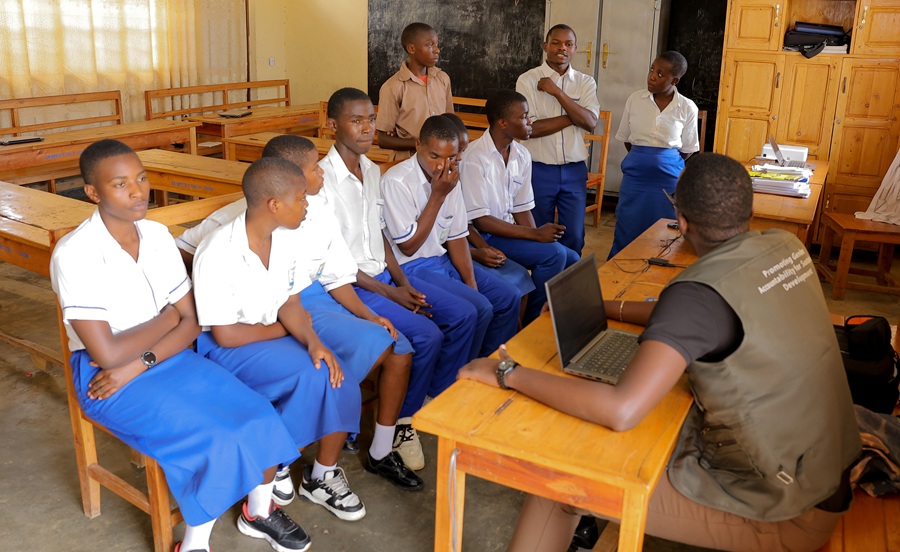
Students' representative from College Saint Martin Hanika in Nyamasheke District
Voices from the Field
“We’re proud to be part of this process. It's not just about checking boxes; it’s about making sure every child has the opportunity to succeed, regardless of gender.”
— Deputy Principal, TTC Mwezi
“When girls feel safe in school, they stay in school. And when boys understand gender equality, everyone wins.”
— Teacher, G.S. Saint Paul Tyazo