Gender Monitoring Office kicked off Compliance Audit of Gender Budget Statement
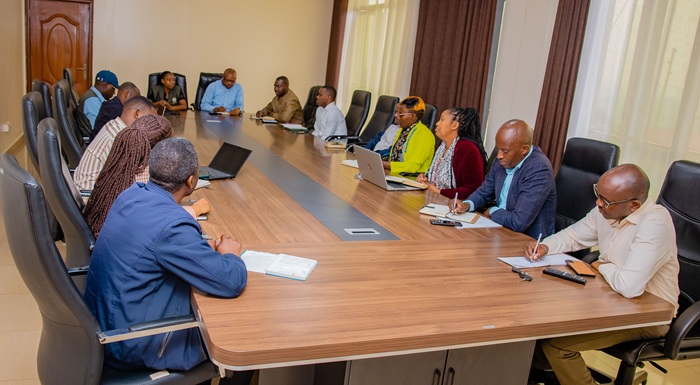
The Gender Monitoring Office (GMO), in collaboration with Trocaire through the Rwanda Civil Society Platform (RCSP), has on Monday 02 February 2026, kicked off a Compliance Audit of Gender Budget Statements (GBS) to assess how public institutions integrate gender equality in planning, budgeting, and service delivery.
This year, the audit exercise will be conducted in eight districts those include Bugesera and Kayonza Districts of Eastern Provinc, Rulindo and Musanze Districts of Northern Province, Rubavu and Nyamasheke Districts of Western Province and Nyamagabe and Nyaruguru Districts of Southern Province. The audit will also be conducted in The Ministry of Health, The Ministry of Local Government, The Rwanda Development Board and The Rwanda Mines, Petroleum and Gas Board
Gender equality remains a fundamental principle of governance in Rwanda and is enshrined in the Constitution of the Republic of Rwanda. To operationalize this commitment, the Government of Rwanda introduced the Gender-Responsive Budgeting (GRB) Programme, which aims to ensure that public resources address the distinct needs of women and men.
Evidence-Based and Participatory Approach
The audit adopts a participatory and evidence-based methodology combining both qualitative and quantitative techniques.
Key approaches include:
•Desk review of GBS implementation reports from 47 budget agencies.
•Review of supporting documents, including District Development Strategies, Imihigo reports, sector strategic plans, and budget implementation reports.
•Field verification visits to validate reported results through direct observation of projects and services.
•Interviews with institutional leaders, implementers, and beneficiaries, including women, men, girls, and boys, to capture real experiences and assess the impact of gender-responsive interventions.
Promoting Accountability for Gender Equality
Through this Compliance Audit, the Gender Monitoring Office aims to strengthen transparency, accountability, and effectiveness in gender-responsive budgeting, ensuring that public investments contribute meaningfully to reducing gender inequalities and improving the lives of all Rwandans.
The findings from the audit will provide evidence-based recommendations to enhance the quality of Gender Budget Statements and improve the integration of gender considerations in public finance management across institutions.